

The trolley is the moving carriage that connects a rail-mounted garage-door opener to the door arm. When the opener runs, the trolley travels along the rail and moves the door through the arm; the spring system—not the trolley—counterbalances the door’s weight. This guide explains common trolley designs, compatibility checks, warning signs, and when diagnosis should come before ordering a replacement. If the trolley, rail, or opener does not operate reliably, our garage door opener repair San Antonio service can diagnose the opener and door together.
What Is a Garage Door Trolley?
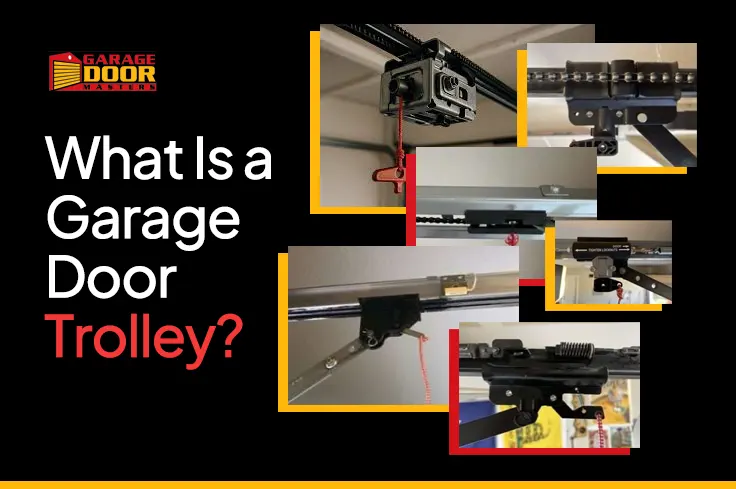
On most rail-mounted openers, the trolley travels along the opener rail and transfers motion to the door through the door arm. It does not support or counterbalance the door’s weight.
A cracked carriage, disconnected arm, damaged rail, loose drive component, opener fault, or heavy and unbalanced door can create similar symptoms, so diagnosis matters. If the door is crooked, unusually heavy, partially open, or showing spring or cable damage, stop operating it and keep clear.
Garage Door Opener Trolley Assembly Types
Different opener systems use different trolley styles. Knowing which type you have makes shopping for parts way easier. Let’s look at the most common setups you’ll find in garages today.
Chain Drive and Belt Drive Systems

Chain drives are louder but tough as nails. Belt drives run quieter, perfect if you have bedrooms above your garage. Both use a similar garage door trolley design that hooks to either the chain or belt. The main difference is how they move along the rail. You’ll find these components inside:
- Main carriage body
- Door arm connection points
- Manual release handle
- Rollers for smooth movement
T-Rail Trolley Components and Hardware
Modern systems often use T-shaped rails instead of round ones. The garage door trolley for these setups slides on a track that looks like the letter T. These newer designs come mostly pre-assembled from the factory. You get mounting brackets, bolts, and that red emergency release cord all in one kit.
Trolley Assembly Replacement Parts and Compatibility
Compatibility starts with the exact opener manufacturer, model number, rail assembly, drive type, door-arm connection, and specified replacement part number. Similar-looking trolleys are not necessarily interchangeable.
Do not choose a universal part or complete kit simply because the failed component is uncertain; diagnose the opener and the complete door first. Use only documented compatible parts and follow the manufacturer’s installation and safety-test procedure.
Choosing the Right Garage Door Trolley Kit for Your Needs
Age alone does not determine whether an opener or trolley should be replaced. Confirm product support, compatible parts, rail condition, door balance, safety operation, and the exact failed component.
Trolley replacement is appropriate only when the failure is confirmed and the remaining system is serviceable. A technician should evaluate a heavy, uneven, damaged, or unreliable door and complete travel, force, photo-eye, and automatic-reversal testing after repair.

Our Experts Are Here To Help