

A garage door can occupy a prominent share of the street-facing exterior, so its color affects how the door relates to the roof, masonry, siding, trim, and front entry. The strongest choice fits the home, the door material and approved finish system, sun exposure, maintenance expectations, and the owner’s design preference—without promising a property-value increase.
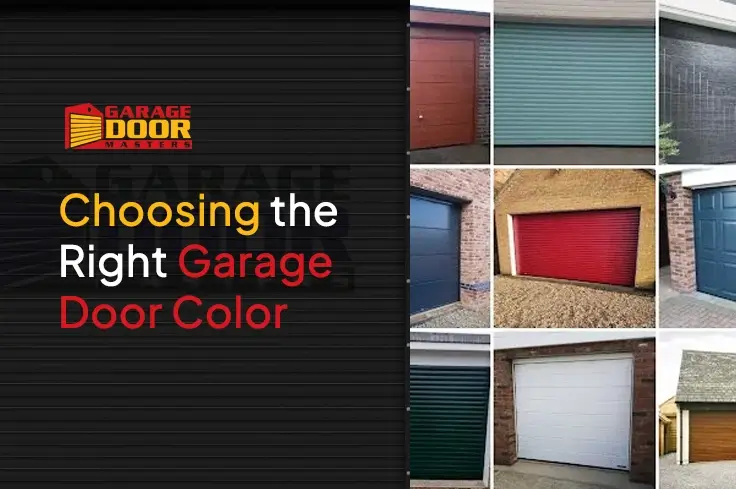
Choosing the Best Garage Door Color For Your Home
A useful color decision moves from the home’s fixed materials to an actual manufacturer sample. Confirm the selected door model, available factory finish, refinishing rules, sun exposure, and any HOA or historic-district requirements before ordering. The sections below provide a comparison framework rather than one universal ‘best’ color.
Why Your Garage Door Color Matters for Curb Appeal
Here’s the thing most people don’t realize. Your door is one of the first things visitors and potential buyers notice. It sets the tone for your entire home’s exterior. A coordinated color can change the exterior’s overall appearance, but the result depends on the home’s materials, lighting, and surrounding colors.
Think about it this way. When you drive through a neighborhood, certain homes just pop. Usually, it’s because everything works together visually. The door plays a massive role in that harmony. Getting the right color ties your whole look together. It makes your home feel intentional and well-designed without breaking the bank.
How to Choose a Garage Door Color That Fits Your Exterior
Start with the permanent exterior elements: roof, brick, stone, siding, trim, and front door. Choose whether the garage door should blend with the main body color, coordinate with trim, or serve as a controlled accent. Check any homeowners-association or historic-district requirements before ordering.
Compare manufacturer color samples against the home in morning, midday, and evening light. Review an actual finish sample when possible because screens and printed swatches may not accurately show gloss, texture, or undertones. Confirm the final color, finish, and model in the written order before production or installation.
Should You Paint Your Garage Door the Same Color as Your House?
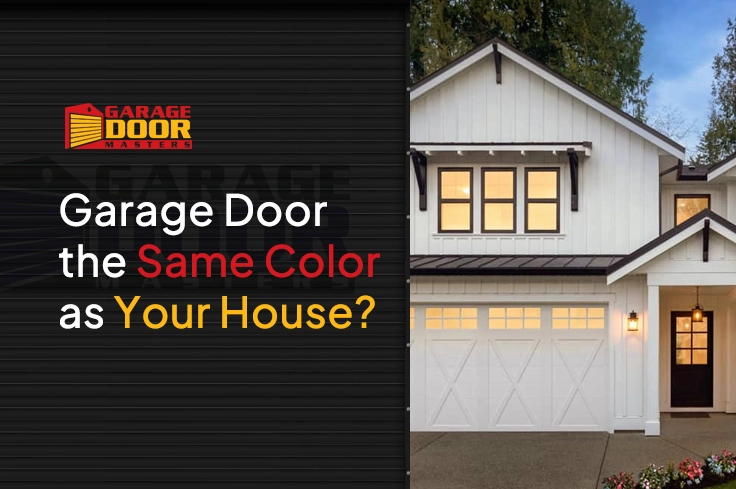
This question comes up all the time. Painting your door the same color as your house creates a seamless, unified look. It works especially well for smaller homes because it makes everything feel larger. The door kind of blends into the background instead of demanding attention.
However, matching isn’t always the best garage door color choice. Sometimes a contrasting shade adds character and visual interest. It really depends on the style of your home and your personal taste. Traditional homes often look great with matching colors. Modern homes can handle bolder contrasts without looking out of place.
Popular Garage Door Color Ideas for Every Home Style
Use these palettes as starting points, then verify the exact manufacturer finish against the home:
White or off-white can coordinate with light trim and traditional exteriors.
Black or charcoal can create strong contrast where the elevation supports it.
Brown or wood-look finishes can relate to masonry, timber, or warm roof tones.
Gray can bridge cool masonry, metal, or neutral siding.
Muted blue or green can serve as a controlled accent when repeated elsewhere.
Availability, gloss, texture, fade resistance, care requirements, and warranty vary by model.
Test an actual sample in the home’s light instead of treating any palette as universally timeless or on trend.
Best Colors for a Gray House Exterior
Gray houses have become incredibly popular. We work with them constantly. If you own a gray house, you’ve got tons of flexibility with your door. White creates a crisp, clean contrast that really pops. Black adds modern edge and makes a bold statement.
For something different, consider navy blue or forest green. These shades complement gray beautifully without being too matchy. A charcoal door also works if you want subtle depth. The key is choosing a shade that’s clearly different from your siding. You don’t want it looking like you tried to match but missed.
How Your Door Material Affects Your Color Choice
Not all door materials take color the same way. Steel doors offer the most flexibility when it comes to finish options. They can be painted almost any shade and hold up well over time. Wood doors have natural beauty but limit your garage door color options somewhat.
The door finish also matters more than people think. Glossy finishes reflect light differently than matte ones. A dark color in a glossy finish might look too intense. The same shade in matte could be perfect. We always recommend seeing actual samples on your specific material before committing.
Using Accent Colors to Make Your Garage Door Stand Out
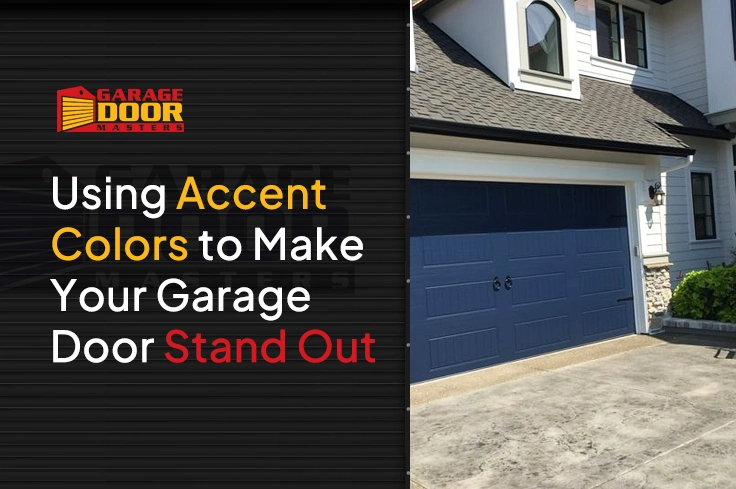
Sometimes you want your door to be a feature, not just blend in. Using an accent color accomplishes exactly that. Your front door color often provides the perfect inspiration. Matching or coordinating these two elements creates a cohesive, designer look.
Bold accent colors work best on homes with neutral exteriors. A bright red or deep blue door can transform a plain gray or white house. Just make sure the shade fits your neighborhood’s vibe. Too bold might look out of place in a conservative area. But in the right setting, an accent garage door color becomes the star of your curb appeal.
Choosing a Complementary Color That Works with Your Siding
Finding a complementary color doesn’t mean matching exactly. It means picking shades that enhance each other. Look at a color wheel if you need help. Colors opposite each other naturally complement one another. This is design basics, but it works every time.
For example, warm-toned siding pairs beautifully with cool-toned doors. Beige or tan homes look great with gray or blue-toned doors. Red brick? Try a deep green or cream color for your garage. These combinations create visual balance without being boring. Your garage door color should enhance your siding, not fight against it.
Finding the Best Garage Door Color for Your Home
Choosing the best garage door color comes down to a few key things. Consider your home’s overall style and existing colors first. Think about whether you want your door to blend or stand out. Factor in your door material and how it handles different finishes.
Don’t rush this decision. A door could last you 20 years or more, so the color matters. Take your time comparing options. Get samples and test them against your exterior. And remember, there’s no single “right” answer here. The best garage door color is the one that makes you smile every time you pull into your driveway.

Our Experts Are Here To Help
Get a Free Estimate
Q: Does garage door color affect home resale value?
A: Yes, it definitely can impact value. A well-chosen garage door color boosts curb appeal, which buyers notice immediately. Neutral colors like white, black, and gray tend to appeal to the widest audience. Bold colors might attract some buyers but turn off others. For maximum resale potential, stick with classic shades that complement most tastes and exterior styles.
Q: How often should I repaint my door?
A: Repainting intervals depend on the door material, factory or field-applied finish, manufacturer instructions, sun and moisture exposure, surface preparation, coating system, and condition. Inspect the finish as directed and address approved touch-up or refinishing needs before corrosion or coating failure spreads.
Q: Can I change my garage door color without replacing the door?
A: Often, but first confirm that the door manufacturer permits refinishing and follow its surface-preparation, coating, application, and curing instructions. Do not paint safety labels, tracks, rollers, seals, photo eyes, cables, springs, or moving hardware. A damaged, rusted, delaminated, or factory-finished door may need professional evaluation before refinishing.
Q: Should my door match my front door color?
A: Matching isn’t required, but coordination looks intentional. Many homeowners choose the same color for a unified look. Others pick complementary shades that work together without being identical. Both approaches can look fantastic. Consider your home’s overall style when deciding. Traditional homes often benefit from matching, while modern homes handle contrast well.
Q: What garage door colors show the least dirt?
A: Medium tones hide dirt best. Pure white shows every speck of dust and grime. Black reveals water spots and pollen easily. Gray, tan, and medium brown shades stay looking cleaner between washes. If low maintenance matters to you, avoid the extremes of the color spectrum. These middle-ground options keep your door looking great longer.
Q: Are dark garage door colors a bad idea in hot climates?
A: Dark colors absorb more heat, which can affect insulated doors over time. However, modern doors handle this better than older models. If you love a dark shade, choose one with good insulation. Also consider your door’s sun exposure. A north-facing garage can handle dark colors better than one facing direct afternoon sun.