
Garage-door components wear at different rates based on the door, use, environment, installation, and maintenance. Recognizing a change in noise, movement, balance, or visible condition can help you stop operation before a fault worsens. The sections below explain common failure points without pretending one anecdote predicts every system. For a complete component and operating-system diagnosis, see our garage door repair in San Antonio service.
Most Common Garage Door Parts That Fail First
If you’ve owned a home for a while, you know that maintenance is just part of the deal. When it comes to your entry system, some garage door parts simply wear out faster than others. The daily up-and-down motion puts stress on the entire setup.
Springs, cables, and rollers take the brunt of this repeated motion. These items experience the most tension each time you press that remote button. Weather conditions play a role too – extreme temperatures cause metal to expand and contract, weakening crucial elements over time.
Regular inspections can help you catch failing components early. Listen for unusual noises, watch for jerky movements, or notice if the system seems slower than usual. These are all warning signs that something’s about to give out.
Garage Door Springs: The Most Frequent Replacement Need
Springs cycle every time the door opens and closes, but service life cannot be reduced to one universal number of years. It varies with the spring specification, door weight and balance, use, environment, installation, and related hardware.
A visible gap, sudden bang, unusually heavy door, crooked movement, or damaged cable requires the door to be taken out of service.
Keep clear and do not disconnect, lift, adjust, or handle the spring system; arrange trained inspection.
Torsion Springs vs. Extension Springs: Lifespan Differences
Torsion springs (mounted above the opening) typically last longer than extension springs (those that stretch along the horizontal tracks). On average, torsion systems handle about 15,000-20,000 cycles before failing.
Extension varieties usually manage about 10,000 cycles before needing replacement. The difference comes down to how each type handles the tension load. Torsion designs distribute weight more evenly, resulting in less wear over time.
Cables, Rollers, and Hinges: Critical Hardware Failure Points
After springs, these smaller garage door parts are next in line for replacement:
- Cables often fray or snap after years of tension
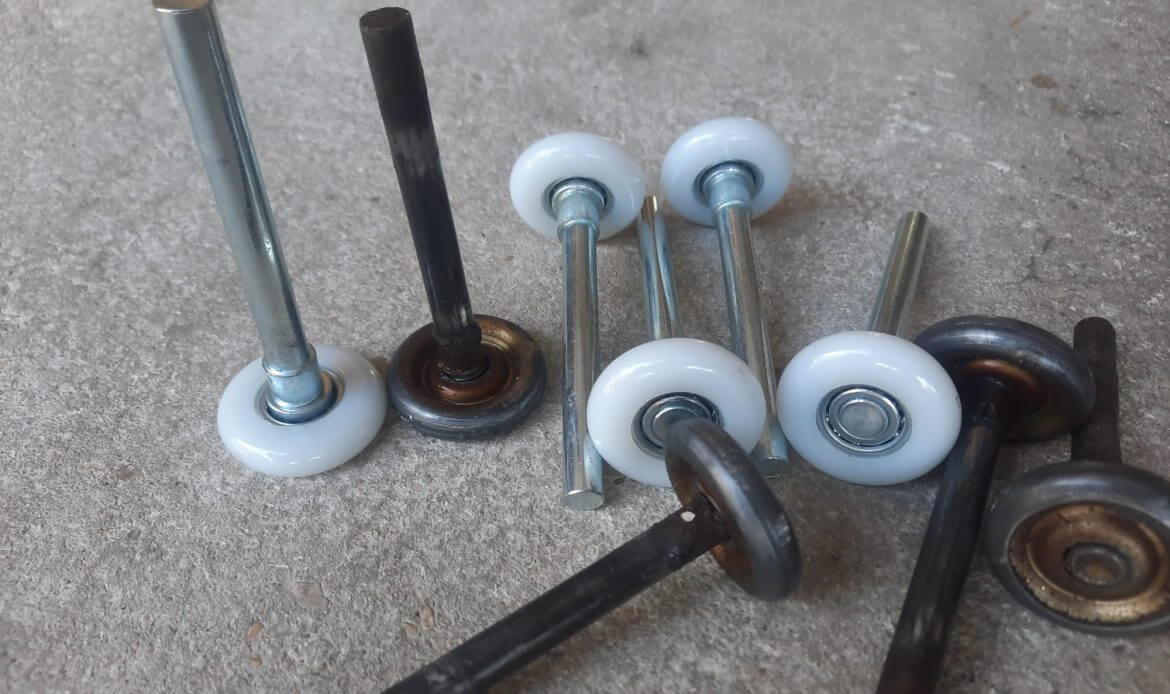
- Rollers get stuck or worn down from constant movement
- Hinges can crack or lose their lubrication
- Brackets may bend or loosen over time
- Weather seals deteriorate from environmental exposure
Many homeowners overlook these “minor” components until something goes seriously wrong. For example, worn rollers might seem like just a noisy nuisance, but they put extra strain on the opener and other mechanisms.
Replacing these items before they completely fail can prevent more expensive damage. A loose hinge might seem harmless until it causes the panels to misalign and jam the entire system.
When to Replace Parts vs. Call a Professional Garage Door Supplier
Homeowners can replace accessible remote batteries, clean photo-eye lenses, remove debris around the doorway, and visually check the closed door for loose hardware or damaged cables and springs without touching them. Follow the exact manuals for approved lubrication and sensor checks. Do not tighten structural hardware, adjust sensors beyond manufacturer instructions, realign tracks, or work on springs, cables, drums, brackets, or opener internals.

Our Experts Are Here To Help
Get a Free Estimate
FAQ
What are garage door parts called?
Garage door parts include springs (torsion and extension), cables, rollers, hinges, tracks, panels, brackets, and the opener. There’s also hardware like the weather seal, safety sensors, remote controls, and various pulleys. Most homeowners recognize these basic components during routine maintenance.
What is the common problem of a garage door?
The most common garage door problem is broken springs. These hard-working components eventually wear out from constant tension. Other frequent issues include misaligned tracks, worn rollers, frayed cables, and malfunctioning openers. Strange noises usually signal something’s wrong before complete failure happens.
What is the bottom part of a garage door called?
The bottom part of a garage door is called the weather seal or bottom seal. This rubber strip attaches to the bottom panel and creates a tight seal against the floor. It keeps out water, drafts, bugs, and debris while helping with insulation and noise reduction.