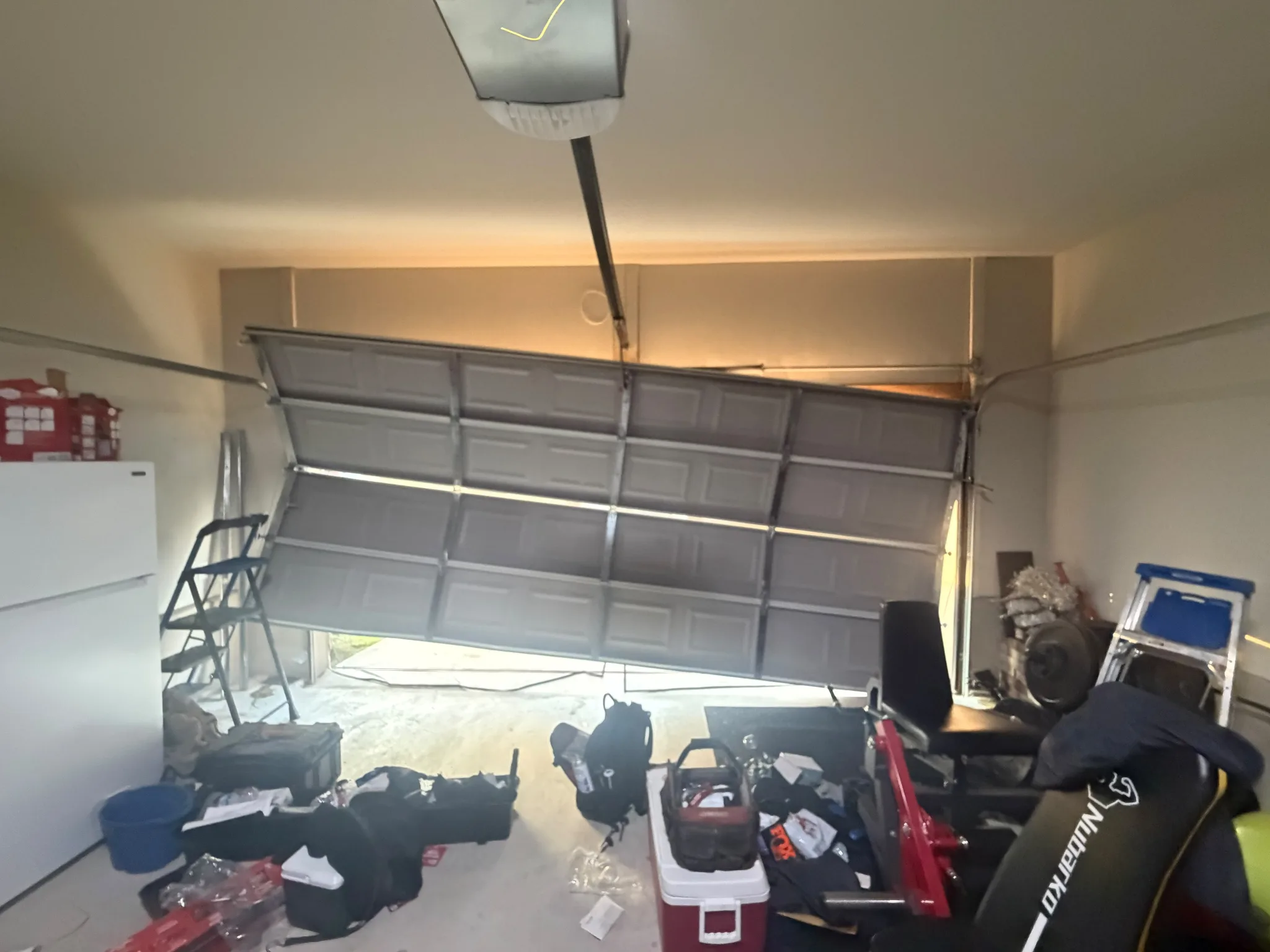
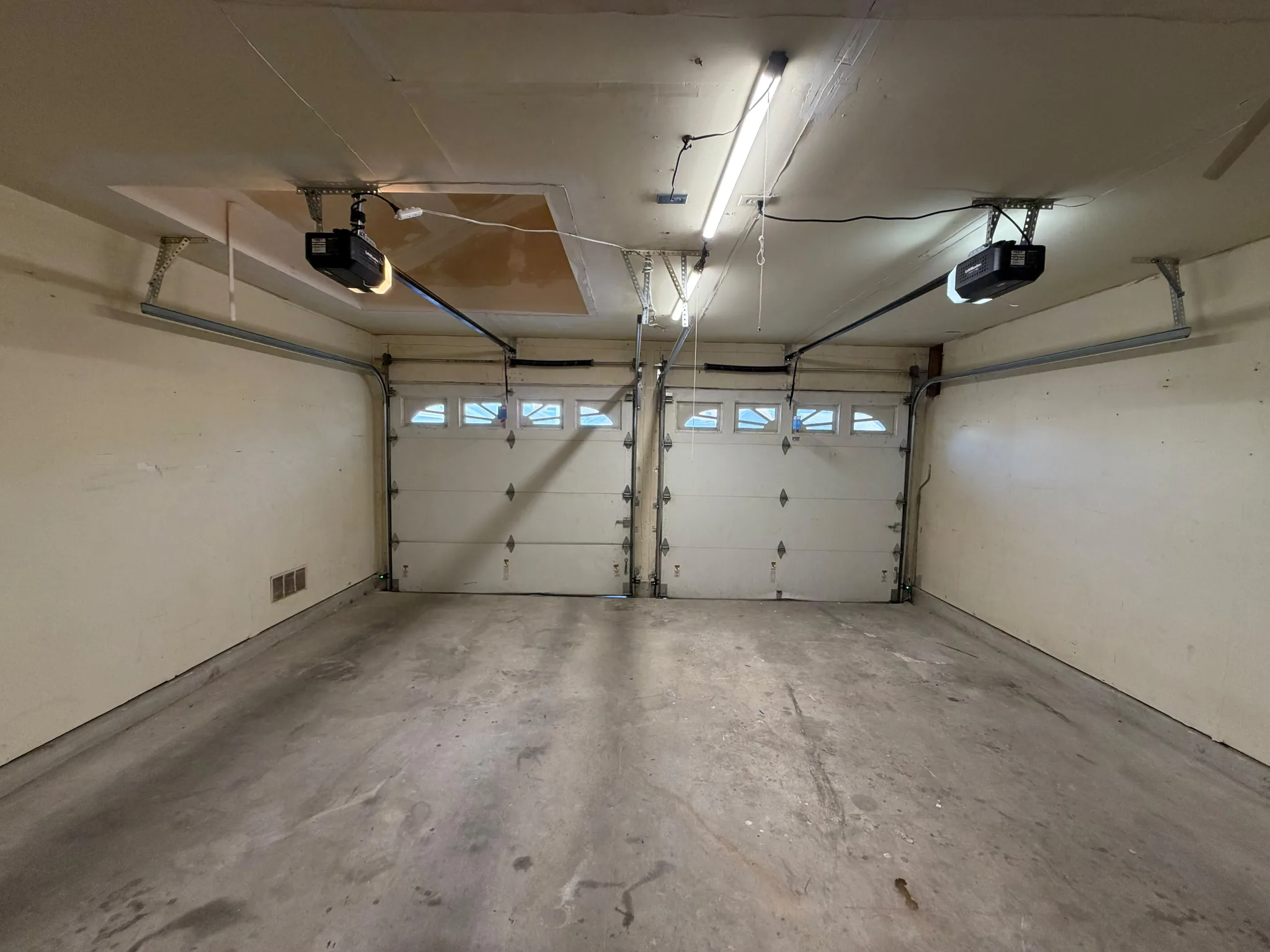
What an off-track garage door looks like, what causes it, what a proper repair fixes, and how the door should work afterward.
An off-track garage door has rollers that have slipped out of the metal track on one or both sides. Before repair, the door usually hangs crooked or stops partway. After a proper repair, it runs level and quietly, stops and reverses when the safety sensors are blocked, and the cause has been fixed, not just the symptom.
We repair off-track doors for homes and businesses across San Antonio. Here is what you will see before the repair, what causes it, and what should be different once the work is done.
What an off-track garage door looks like before repair
Most off-track doors are easy to spot. Look for these signs:
One or more rollers sitting outside the track instead of inside it.
The door tilted, with one side higher than the other.
A gap between the door edge and the track on one side.
The door stuck partly open or jammed against the track.
Grinding, scraping or popping sounds just before the door stopped.
A loose or frayed lift cable hanging near the bottom corner.
If you see any of these, stop using the door. Do not lift it, pull the emergency release, or try to push the rollers back in. The door is heavy and held by springs under high tension, and an off-track door can drop or swing without warning.
What causes a garage door to come off track
A door rarely jumps the track for no reason. The most common causes are:
Impact: a car bumping the door or the track bends the rail or knocks rollers out.
Broken or slipped cable: one side drops faster than the other and the door twists out of line.
Broken spring: the door loses balance, and the opener strains against the full weight.
Worn rollers or hinges: loose or cracked parts let the door wobble until a roller slips free.
Loose or misaligned track: brackets work loose over time and the track spreads apart.
Something in the door's path: an object under the door makes it bind and twist when it closes.
Finding the cause matters, because putting the rollers back without fixing it means the door will likely come off again.
What professional off-track garage door repair covers
A proper garage door repair fixes both the door and the reason it left the track. On a typical off-track call, we:
Secure the door so it cannot fall or shift while we work.
Inspect the tracks, rollers, cables, springs, hinges and opener to find the cause.
Explain what we found and which parts need repair or replacement before starting.
Straighten or replace bent track sections and reset the rollers.
Replace damaged parts such as rollers, cables or springs, and rebalance the door.
Test the door and opener, including the safety sensors and auto-reverse.
What affects the cost of off-track door repair
Every job is priced after inspection, because the cost depends on what is damaged. The main factors are:
Whether the track only needs realigning or a section must be replaced.
How many rollers, hinges or cables are damaged.
Whether a spring broke and needs replacement.
Whether any door panels were bent or cracked.
Whether the opener was strained and needs repair.
A door that simply slipped off one roller usually needs less work than one hit by a car, where track, panels and cables may all be affected.
What should be different after the door is repaired
A before photo shows the crooked door; the after result is about how the door works. Once the repair is done, check that:
The door sits level when closed, with even gaps on both sides.
All rollers run inside the tracks the whole way up and down.
The door opens and closes smoothly, without scraping or jerking.
It reverses when something blocks the safety sensors.
The cables are tight and wound evenly on both drums.
Ask the technician to show you these tests and to list what was replaced. Safety sensors must stay connected: federal rules for automatic garage door openers require entrapment protection, and bypassing the sensors is never a repair.
Regular garage door maintenance helps catch worn rollers and loose brackets before they push the door off track again.
When an off-track door needs more than track work
Sometimes the damage goes beyond the track. Bent panels, a broken spring, or an opener that kept pulling against a jammed door can all need their own repair. If the opener was damaged, our garage door opener repair covers it in the same visit when possible.
Replacing the whole door is only worth it when several panels are badly bent or the door is old and worn throughout. If replacement is suggested, ask which damage makes repair impractical. You can compare our repair and replacement options to see what fits your door.
How to get your off-track garage door fixed
Leave the door as it is and keep people, pets and cars away from it. Unplug the opener so nobody presses the remote by mistake.
Then contact us or call 210-399-1709. Tell us where the door is stuck, which side is off track, and anything you heard or saw when it happened. We are available 24/7 across San Antonio and offer free estimates.
Need help with your garage door?
Call us at 210-399-1709 to discuss your off-track door and request a free estimate.
Can I use the opener to pull an off-track garage door back into place?
No. Running the opener on an off-track door can bend the track further, damage panels, or make the door fall. Unplug the opener and leave the door where it is until a technician secures it.
Does one roller out of the track mean the door must be replaced?
Usually not. A single roller off track is often fixed by realigning the track and replacing worn rollers. Replacement only makes sense when several panels are badly damaged or the door is worn throughout.
Could the garage door opener also be damaged?
It can be, especially if it kept running against a jammed door. A stopped opener is not always broken, though. We check the door and the opener together, so you only pay for what actually needs fixing.
Should garage door tracks be lubricated after a repair?
No. Tracks should be kept clean, not greased, because lubricant collects dirt and can make rollers slide instead of roll. Lubricate the rollers, hinges and springs as the door's manufacturer recommends.
Can an off-track garage door be fixed in one visit?
Most off-track repairs are finished in one visit when the needed parts are on hand. If a track section, spring or panel has to be ordered, we will tell you before starting and secure the door until the part arrives.