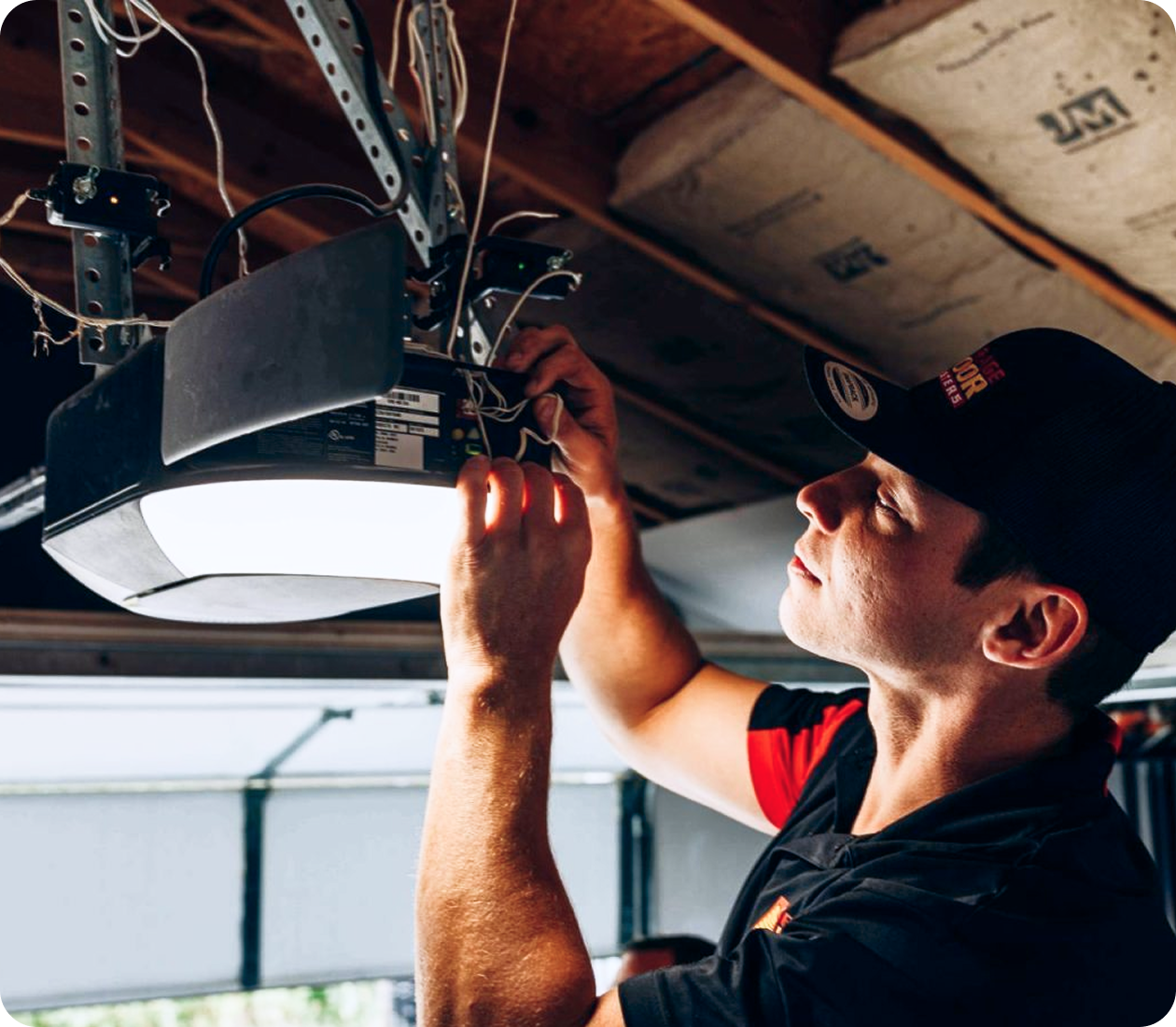
Garage Door Opener Installation Cost in Canyon Lake: What Homeowners Should Expect

May 28, 2026

Garage door opener installation in Canyon Lake typically ranges from $350 to $900, depending on the opener type, wiring needs, and door condition. At Sagaragedoormasters, we’ve helped homeowners understand garage door opener installation cost in Canyon Lake for years of experience, and we’ve noticed that the final price often depends more on door balance and electrical setup than the opener itself. Many homes near the lake have heavier insulated doors that require higher horsepower units. We’ve seen homeowners try to save a few hundred dollars by reusing failing safety sensors or outdated wiring, only to face repeat service calls and code violations later. One Canyon Lake client had to replace a newly installed opener because the original installer ignored spring tension issues. Before scheduling installation, it helps to review your overall garage door system condition to avoid paying twice.

A Practical Checklist for Code-Compliant, Long-Lasting Results
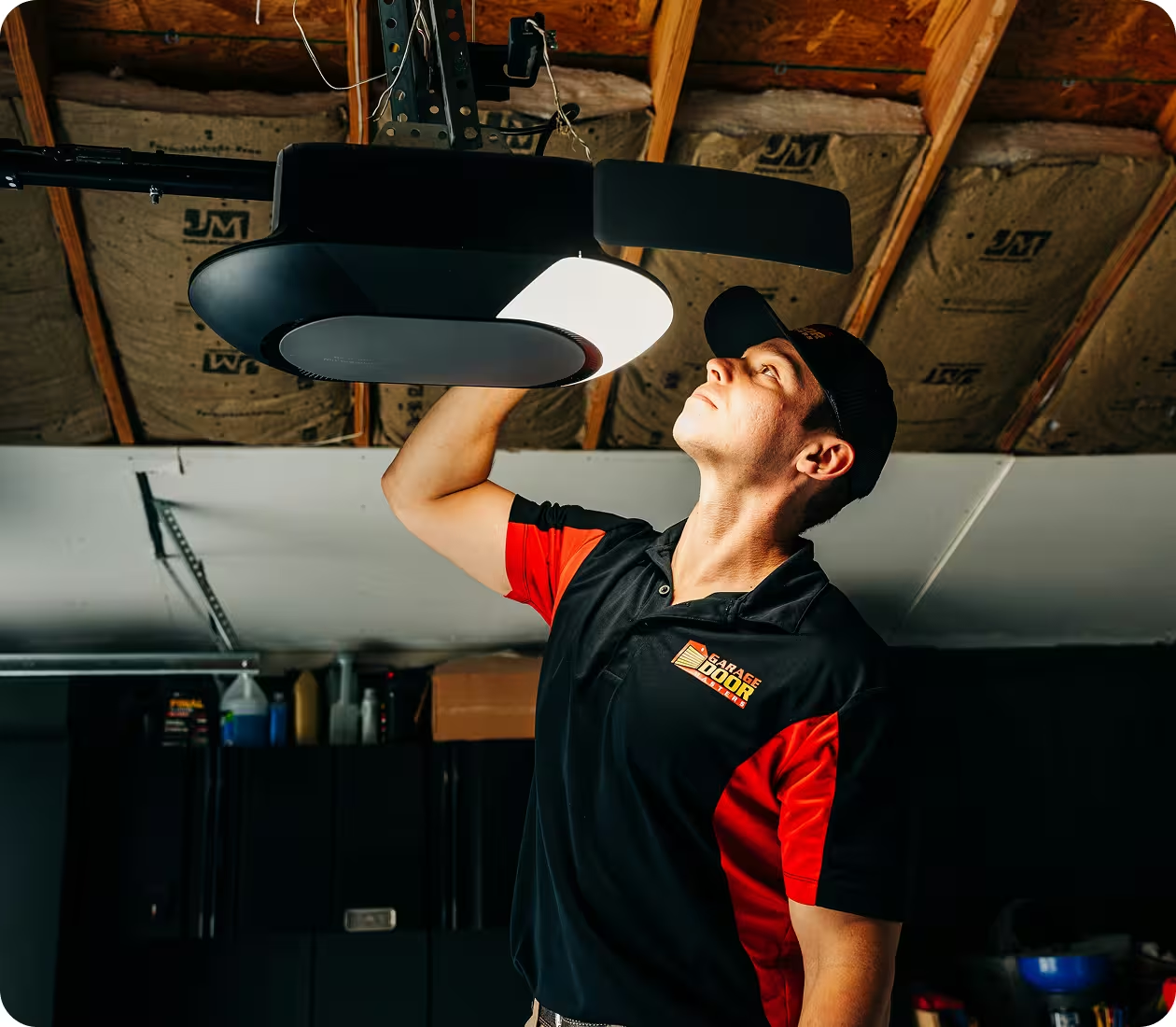
A quality opener installation starts with structural assessment and ends with calibrated safety testing. The goal is quiet operation, proper force limits, and full compliance with current safety codes. Skipping steps may reduce upfront cost but increases mechanical failure risk. Our team follows a structured checklist:
  • Confirm door balance: Adjust torsion springs so the door remains level at mid-travel.
  • Select appropriate horsepower: ½ HP for light single doors, ¾ HP or higher for insulated or oversized doors.
  • Install solid header brackets: Lag bolts secured into framing members, not drywall or trim.
  • Align safety sensors: Mounted no higher than 6 inches from the floor per UL 325.
  • Program travel and force limits: Calibrated to manufacturer specifications.
  • Test auto-reverse: Using a 2×4 board under the door to verify reversal.
We also recommend belt-drive systems for attached garages in Canyon Lake homes because they reduce vibration and interior noise. Battery backup units are valuable during local power outages, especially in hillside properties. Installations that omit reinforced mounting brackets or fail to use proper angle iron supports often lead to rail flexing and premature wear. Excellent service includes full cleanup, user training, and syncing remotes and smart controls. When estimates lack detail about sensor testing or force calibration, homeowners should ask questions before approving the work.

How to Avoid Paying Twice for the Same Installation

Most opener installations in Canyon Lake take 3 to 5 hours when no structural modifications are required. Costs may range from $350 to $900 for standard installations and could exceed $1,200 if electrical work, structural reinforcement, or spring replacement is needed. Pricing typically depends on:
  • Site complexity: Ceiling height, outlet placement, door weight, and framing condition.
  • Material costs: Belt-drive vs. chain-drive, horsepower rating, smart features, battery backup.
  • Total scope: Whether spring adjustments, sensor replacement, or track repairs are required.
One Canyon Lake homeowner purchased an online opener and hired a handyman to install it. The rail was not level, and the safety sensors were mounted above code height. The door reversed unpredictably and eventually damaged the top panel. Correcting the installation and replacing the panel cost more than a professional install would have. We advise homeowners to confirm that installers test balance, program force limits, and verify compliance with UL 325. Choosing the right horsepower and ensuring structural mounting prevents premature gear failure. These figures are preliminary benchmarks for informational purposes only and do not constitute a binding quote. An on-site evaluation is required for a final proposal.

Get a Clear, Upfront Installation Assessment

If you’re comparing options for garage door opener installation in Canyon Lake, we’re ready to provide a straightforward evaluation. Our team inspects door balance, electrical setup, mounting structure, and safety compliance before recommending equipment. That approach prevents unnecessary upgrades while protecting you from premature motor failure or code issues. We focus on right-sizing the opener, confirming UL-compliant safety features, and delivering a clean, calibrated installation that performs quietly and reliably. Whether you’re replacing an aging chain-drive unit or upgrading to a smart belt-drive system with battery backup, we’ll explain your options in plain terms. Schedule a low-pressure consultation and get accurate pricing based on your actual door and garage conditions – not a guess over the phone.

FAQs

Garage door opener installation in Canyon Lake usually ranges from $350 to $900 for standard residential setups. The lower end often covers replacing an existing unit with similar horsepower when the wiring, outlet, and door balance are already in good condition. Costs increase when homeowners upgrade to a ¾ HP or 1 HP belt-drive system, add battery backup, or require structural reinforcement at the header. Homes with insulated steel doors or custom wood doors often need higher torque motors and spring adjustments, which adds labor time. If no ceiling outlet exists, a licensed electrician may need to install one to meet grounded outlet requirements. We recommend evaluating the entire door system before approving a quote. A balanced door reduces motor strain and extends opener lifespan, saving money over time. An on-site inspection provides the most accurate pricing because every garage layout in Canyon Lake is slightly different.
For most Canyon Lake homes, a ¾ HP belt-drive opener offers the best balance of strength and quiet operation. Belt-drive systems use reinforced rubber belts instead of metal chains, which significantly reduce vibration – especially important for attached garages with living space above. If your garage is detached and noise is less of a concern, a chain-drive system can still be cost-effective. However, insulated double doors or carriage-style doors typically perform better with higher horsepower units to prevent gear wear. Battery backup is worth considering because power outages can occur during storms. Smart-enabled openers also allow monitoring and remote access, which many homeowners prefer for security. The right choice depends on door weight, daily usage frequency, and whether structural reinforcement is required. Matching horsepower to door size prevents premature mechanical failure.
A standard opener replacement may take 3 to 5 hours when the door is balanced and electrical access is available. New installations without prior wiring could take longer, especially if structural framing adjustments are needed. Costs may range from $350 to $900 for straightforward replacements and could exceed $1,200 if additional work is involved. Final pricing depends on:
  • Site complexity: Ceiling height, outlet placement, and door balance.
  • Material costs: Opener type, horsepower rating, smart features, battery backup.
  • Total scope: Spring adjustments, reinforcement brackets, or track alignment.
Larger insulated doors require more torque, which can increase equipment costs. Electrical upgrades also add labor. These figures are preliminary benchmarks for informational purposes only and do not constitute a binding quote. An on-site evaluation is required for a final proposal.
DIY installation is possible for mechanically experienced homeowners, but it carries risk. Modern openers require precise travel limit programming, sensor alignment within 6 inches of the floor, and proper force calibration to comply with UL 325 safety standards. Improper spring balance is the most common issue. If torsion springs are misadjusted, the opener compensates for excess weight, which can strip gears or burn out the motor. Mounting brackets must also anchor into framing members, not drywall. We’ve seen installations where the rail sagged because angle iron supports were omitted. That misalignment caused uneven door travel and panel damage. While DIY may reduce upfront cost, professional installation ensures safety compliance, warranty protection, and correct mechanical calibration. For heavier or insulated doors, professional service is strongly recommended.
Routine maintenance significantly reduces long-term repair costs. We advise homeowners to inspect door balance twice per year by disconnecting the opener and manually lifting the door halfway. If it doesn’t stay in place, spring tension needs adjustment. Lubricate metal rollers, hinges, and torsion springs using a silicone-based or lithium-based garage door lubricant – never standard grease, which attracts debris. Clean and realign safety sensors to ensure uninterrupted signals. Check mounting brackets and rail bolts annually for tightness. Vibration can loosen hardware over time, especially in frequently used garages. Listening for grinding noises or delayed response during opening cycles helps identify early mechanical wear. Addressing small issues promptly prevents motor strain and gear failure, extending the opener’s lifespan.
Canyon Lake homes often feature insulated double doors due to temperature shifts and energy efficiency preferences. These heavier doors require stronger motors and properly calibrated torsion springs. When springs weaken, openers experience added strain. Humidity and seasonal temperature swings can also affect metal components. Expansion and contraction may slightly alter track alignment, leading to noise or uneven travel. Garages built on sloped driveways sometimes require customized rail positioning to maintain clearance. We’ve also observed that older homes may lack ceiling outlets near the opener location. Bringing wiring up to current electrical standards adds cost but improves safety and reliability. Understanding these local conditions helps homeowners select the correct horsepower and mounting method from the start.
Choose a company that verifies door balance, tests safety sensors, and calibrates force settings during installation. Ask whether the installer follows UL 325 standards and performs a 2×4 auto-reverse test before completion. Proper insurance and relevant trade licensing are important, especially if electrical modifications are required. Installers should clearly explain horsepower selection and mounting reinforcement methods. Detailed estimates should outline equipment type, labor scope, and whether spring adjustments are included. When quotes lack clarity about safety testing or structural mounting, it often indicates shortcuts. A professional installer will also provide operational training and confirm remote and keypad programming before leaving the job site.
Replacement makes sense when repair costs approach half the price of a new unit or when the opener lacks modern safety features. Units manufactured before current UL 325 standards may not include advanced entrapment protection or rolling-code security. Grinding noises, intermittent operation, or failure to reverse during safety testing indicate internal wear. If replacement parts are discontinued, investing in a new system is often more practical. Homeowners should disconnect the opener and operate the door manually if malfunction occurs. If the door moves smoothly by hand, the issue likely involves the motor or logic board. Schedule professional service promptly to prevent further damage. Upgrading improves reliability, reduces noise, and enhances safety compliance.