

A garage-door screen is a secondary barrier fitted across the opening to limit insect entry while allowing varying levels of airflow and visibility. It does not replace the overhead door, weather seal, security, insulation, or required fire separation. The right choice depends on the opening, door operation, screen type, intended use, climate, and manufacturer limitations.
What Is a Garage Door Screen?
A garage-door screen covers the opening while the overhead door is open. Depending on the design, it may be fixed, sliding, magnetic, track-mounted, retractable, or motorized. Airflow, visibility, insect control, closure, and wind tolerance vary with the mesh, frame, fit, and product.
Before selecting one, measure the finished opening and available headroom and side room, then confirm compatibility with the door, tracks, springs, opener, controls, and vehicle path. Follow the screen manufacturer’s installation and operating limits rather than assuming every product works with every overhead door.
Types of Screens for Your Garage
The main screen categories solve different access and storage needs. Compare how the screen opens, where it stores, whether vehicles must pass through, how it fastens, and what clearance the existing door and opener require. Product-specific dimensions, wind limits, and installation instructions should control the choice.
Retractable and Roll-Up Options
Retractable screens store in a cassette or roll-up assembly when not in use, subject to the selected design. Manual and powered versions exist, and some are intended for frequent vehicle access. Confirm the opening dimensions, side room and headroom, controls, obstruction sensing where provided, wind limits, and compatibility with the overhead door before installation.
Magnetic Screen Door Systems
Magnetic screens usually join at a center opening and may attach with hook-and-loop material or other fasteners. Fit, closure strength, traffic suitability, pet compatibility, wind tolerance, and mounting method vary by product. Follow the manufacturer’s dimensions and installation instructions; do not assume a kit is appropriate for children, pets, or every opening.
Fiberglass Mesh Screens
Fiberglass is one available screen-mesh material. Mesh weight, weave, coating, edge reinforcement, visibility, airflow, UV-exposure limits, and tear resistance vary by product. Compare the manufacturer’s specifications and warranty for the actual opening and use; the material alone does not establish service life or suitability.
Key Benefits of a Garage Door Screen
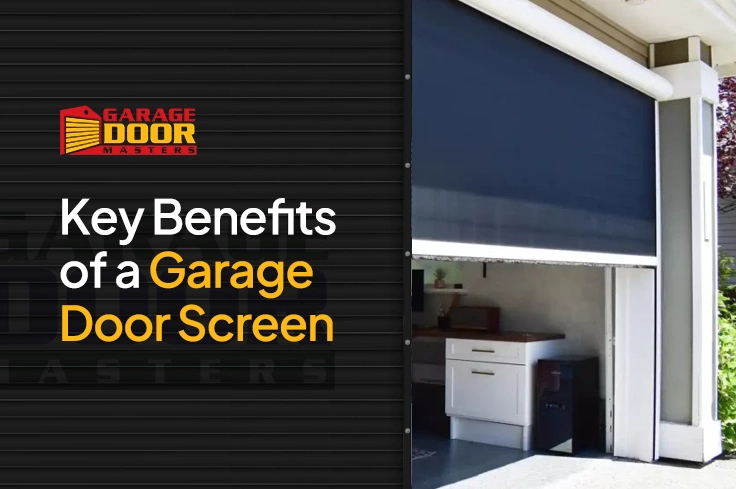
A correctly sized and closed screen can reduce insect entry while allowing product-specific levels of airflow and visibility. It will not cool the garage by itself, filter all dust or debris, make the opening secure or weather-tight, or turn the garage into approved living space.
Evaluate benefits in these product-specific terms:
- Fit and closure around the complete opening
- Airflow and visibility through the selected mesh
- Vehicle and pedestrian access with the screen in use
- Storage or retraction when the screen is open
- Manufacturer limits for wind, weather, children, and pets
Using a Screened Garage More Comfortably

A screen can make some garage activities more comfortable by reducing insects while allowing airflow, but the garage remains a garage. Do not treat a screen as permission to block egress, defeat the overhead door’s safety system, run a vehicle in an enclosed space, or convert the area to habitable space without required approvals.
Plan the screen around the actual use, clearance, lighting, ventilation, electrical equipment, stored materials, and traffic path. Keep children and pets away from moving doors and powered screen components, and follow both manufacturers’ operating instructions.
Are Garage Door Screens Worth It?
Whether a garage-door screen is worth considering depends on how the garage is used and the complete project scope. Cost factors include the screen type, opening dimensions, frame and mesh materials, manual, retractable, or motorized operation, site conditions, electrical work, freight, and installation. Compare the written scope, compatibility, warranty, and total delivered cost instead of relying on a universal price or payoff claim.
Value is use-specific: frequency of use, insect pressure, climate, storage needs, clearance, and willingness to maintain the screen all matter. Confirm the complete installed scope and limitations; do not assume a screen will pay for itself, cool the garage, add living area, or improve security.
Finding the Right Screen for Your Needs
Measure the finished width and height, headroom, side room, tracks, springs, opener, controls, and vehicle and pedestrian paths. Decide whether the screen must be removable, sliding, retractable, or powered, then match the actual conditions to the manufacturer’s approved dimensions and clearances.
For a commercial garage-door opening, also confirm compatibility with the door’s duty cycle, controls, egress needs, and site safety plan. Compare specifications, installation instructions, warranty, serviceability, and complete delivered cost for the actual opening.

Our Experts Are Here To Help
Get a Free Estimate
Q: What affects the cost of a garage-door screen?
A: Screen pricing varies with the opening size, screen and frame materials, magnetic, retractable, sliding, or motorized operation, wind and insect-control requirements, installation conditions, electrical work, freight, accessories, and warranty. Compare a written, compatible scope and total delivered cost for the actual opening.
Q: Can I install a garage door screen myself?
A: Some removable or magnetic products are marketed for consumer installation, while track-mounted, powered, or custom systems may require professional installation or electrical work. Use the manufacturer’s instructions, verify anchorage and clearances, and do not modify the overhead door or its safety devices to make a screen fit.
Q: How do I choose a screen for my garage-door opening?
A: No single screen fits every opening. Measure the finished width and height, headroom, side room, tracks, springs, opener, controls, and any obstruction. Then match those conditions to the manufacturer’s approved size, mounting method, and operating clearances; a custom product may be needed.
Q: How should I clean and maintain a garage-door screen?
A: Follow the manufacturer’s instructions for the mesh, frame, tracks, fasteners, and powered components. Remove debris gently and use a compatible mild cleaner only when permitted. Inspect attachment points and travel paths, stop using damaged or binding components, and keep lubricants and adjustments away from parts the manufacturer does not identify for owner service.
Q: Will a screen block my view or make the garage dark?
A: Visibility and daylight depend on mesh color, weave, density, coating, viewing direction, and lighting on each side. Samples and product specifications are more reliable than a universal clarity claim. Denser privacy or insect-resistant meshes may reduce airflow or visibility.
Q: Can I use my existing garage door screen in winter?
A: Use depends on the product’s temperature, wind, precipitation, and storage limits. Mesh is not insulation or a weather barrier, and ice, snow, or strong wind may require retraction or removal. Follow the manufacturer’s seasonal-use and storage instructions rather than substituting an unapproved curtain.